





INTERREG POCTEFA: SAVASCO
Structuring a cross-border construction industry based on maize and sunflower stalks.
SAVASCO is a project co-funded by INTERREG POCTEFA (Spain - France- Andorra) 2014-2020, which seeks to structure an innovative and eco-efficient construction sector using maize and sunflower stalks. Based in the Trans-Pyrenean region, it should help contribute to reducing the environmental impacts of the building sector.
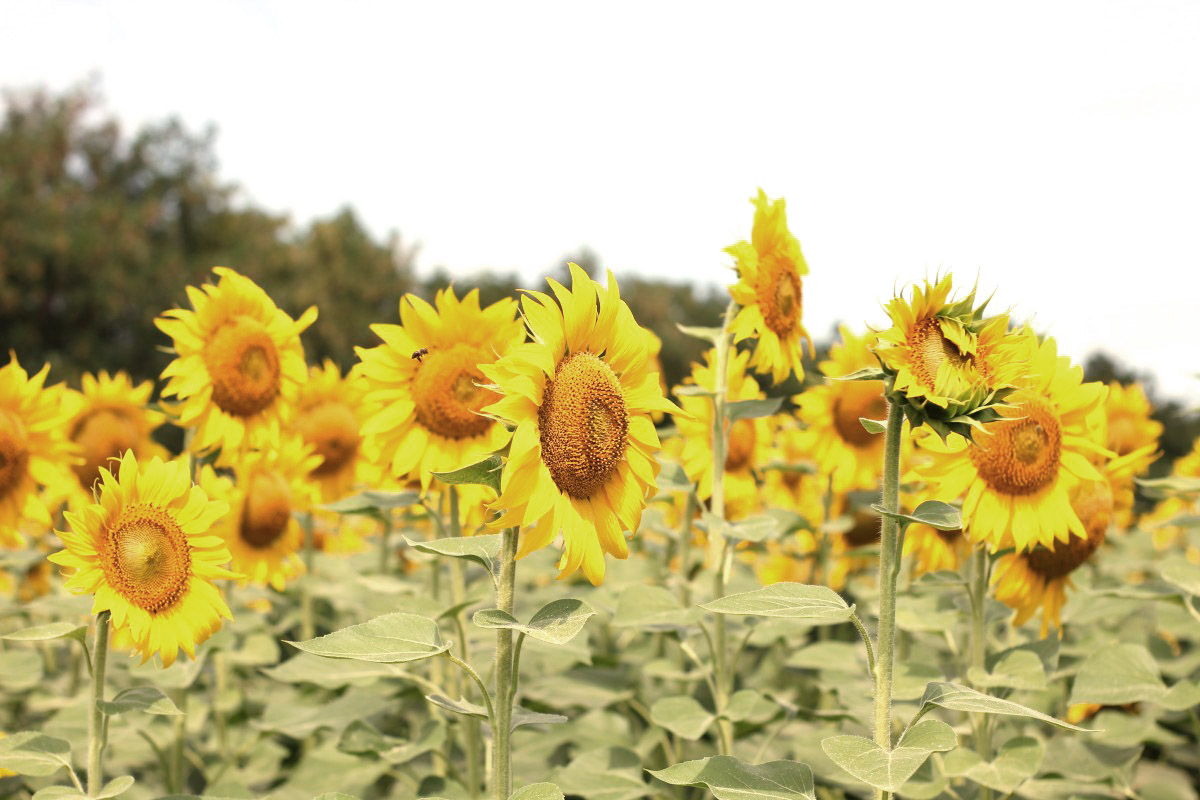
Today, insulation building materials are mainly derived from non-renewable raw materials that are mineral or oil-based, and the extraction and processing of these materials has a major environmental impact, especially in terms of greenhouse gas emissions and energy consumption. However, certain agricultural waste, such as maize and sunflower stalks, have physical properties that give them desirable thermal insulation and hygric buffering performances for the formulation of building materials. Moreover, these biosourced raw materials have many environmental advantages: they are renewable, local and are carbon sinks.
To help develop this innovative and sustainable economic sector, SAVASCO is based on four major objectives:
- Develop processes for collecting and processing maize and sunflower stalks at a low cost to produce plant aggregates with controlled physico-chemical characteristics.
- Formulate, implement and characterise building products incorporating these plant aggregates.
- Identify and develop a cross-border network of stakeholders in the use of maize and sunflower stalks in building materials (agricultural cooperatives, designers, craftsmen, construction companies, material distributors, research laboratories and training organisations).
- Carry out a life cycle assessment of the building products developed as well as of the sector as a whole.
Key deliverables:
- Develop a process for collecting maize and sunflower stalks at a low cost.
- Process the stalks to provide two types of plant aggregates derived from fragments of sunflower and maize pith and hulls..
- Characterise these plant aggregates produced at the multiphysical, environmental and economic levels.
- Formulate, implement and characterise the use and durability performance of this comprehensive bioclimatic construction solution.
- Build two instrumented technological demonstrators to be used as tools for research, training and communication.
- Assess the environmental, economic and social performance of the building products and sector developed.
- Create an association to bring together farmers, building professionals, laboratories and institutions to formalise the structuring of the sector and act as a tool for defending its interests, and bring together and support companies and regions to ensure its development beyond the period of the SAVASCO project.
This project is co-funded (65%) by the European Regional Development Fund (ERDF) through the Interreg V-A Spain-France-Andorra programme (POCTEFA 2014-2020). POCTEFA aims to strengthen economic and social integration in the Spain-France-Andorra border area. It focuses on developing cross-border economic, social and environmental activities through joint strategies to promote sustainable regional development. More information can be found on the programme website (www.poctefa.eu) and the European Union Regional Policy website (ec.europa.eu/regional_policy/es/).
Partners
- Laboratoire LMDC et le LERASS, Université Toulouse III Paul Sabatier
- Groupe de recherche GICITED, Universitat Politècnica de Catalunya
- Groupe de recherche SUSCAPE, Universitat Rovira i Virgili
- Laboratoire AGROMAT-LCA, Institut National Polytechnique de Toulouse
- FCAC Federació de Cooperativas Agràries de Catalunya
- Coopérative d'artisans éco-constructeurs Terre de Bois
- Cooperativa d'arquitectura. Bioconstrucció. Participació. Eficiència energètica. ARQBAG
- Coopérative de travail associée COECO
- Association Envirobat Occitanie
- Association régionale d'Ecoconstruction du Sud-Ouest (ARESO)
- Agrupació Arquitectura i Sostenibilitat del Collegi d’Arquitectes de Catalunya (AuS)
- House Habitat, Casa Pasiva S.L.
- ORíGENS, Escola Taller de Bioconstrucció
- EcoHabitar coop. revue d'éco-construction
Farmers, architects, students, cooperatives, trainers and others. Would you like to contribute to the development of SAVASCO or simply keep up with the project's latest achievements? Get in touch with the project leaders and follow us on social media!